Qualifying Pharmaceutical Water: WFI and PW under Control
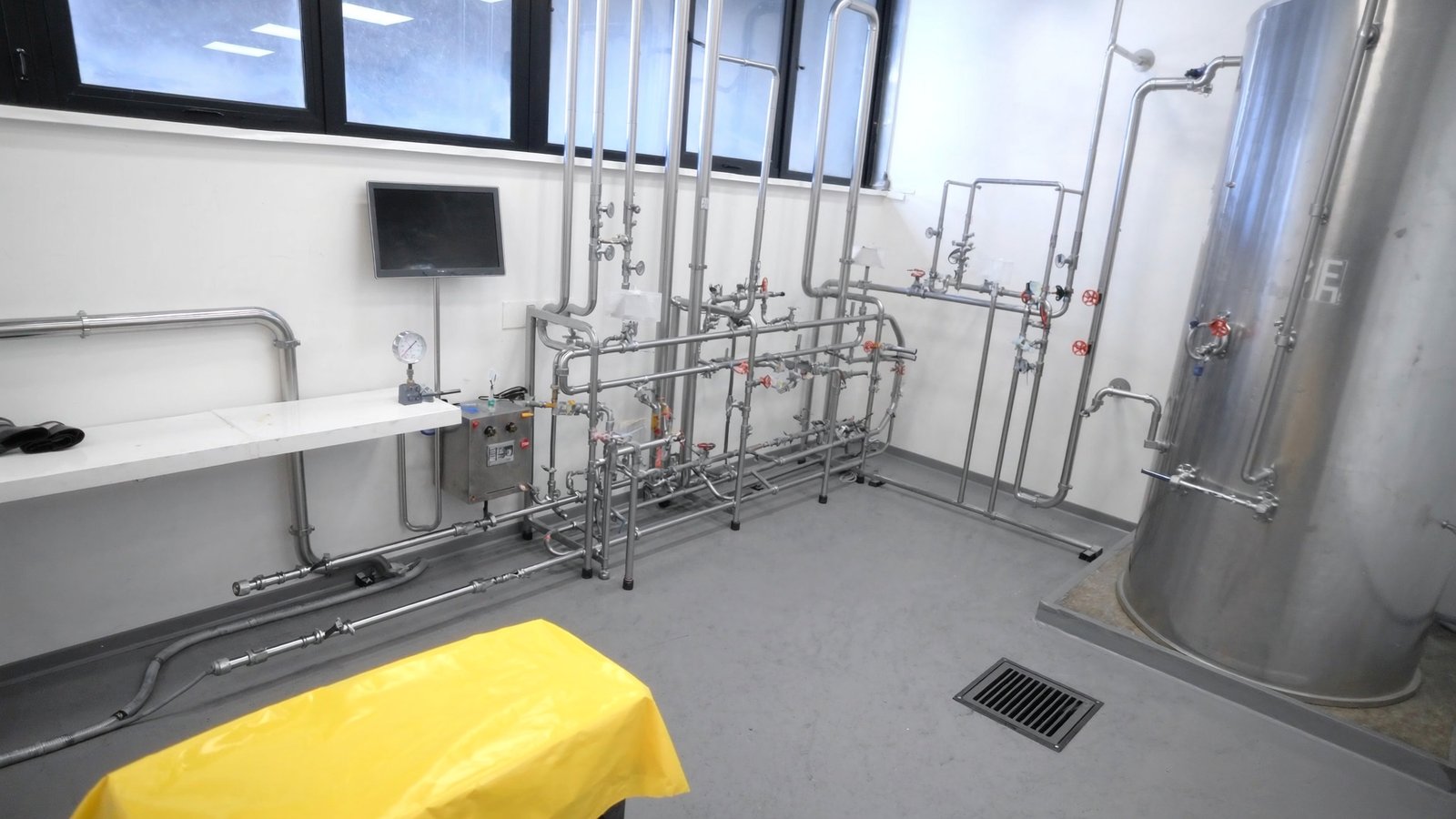
No other raw material is used as frequently and monitored as intensively in medicinal product manufacturing as water. Purified Water (PW) and Water for Injections (WFI) touch almost every process, from cleaning to formulation. Accordingly, regulators look closely when a water system is to be qualified, because a fault in the water affects the entire production.
What the Pharmacopoeia Requires
The requirements for water quality are set out in the monographs of the European Pharmacopoeia (Ph. Eur.), for example for Purified Water and Water for Injections. The parameters monitored include conductivity and total organic carbon (TOC) as well as microbiological limits; for WFI, strict endotoxin limits are added. The essential difference lies in this microbiological and endotoxin-related purity: WFI is the most demanding water quality and is used for the manufacture of parenteral products.
Generation without Mandatory Distillation
Since 2017, the Ph. Eur. has also permitted WFI generation without distillation, provided that an equivalent process such as reverse osmosis in a suitable combination is used and monitored accordingly. This opening has changed the landscape of installations without lowering quality requirements. Anyone choosing membrane-based generation takes on greater responsibility for continuous monitoring, because the thermal safety of distillation is no longer present.
Storage and Distribution Are Decisive
A water system is more than its generation. Storage and distribution are particularly critical, where biofilm and microbial contamination arise. Proven design principles address this at the root:
- Continuously circulating loop systems instead of dead zones, with turbulent flow.
- Compliance with the dead-leg rule at branch points to avoid stagnant volumes.
- Sanitisability through hot storage, hot water or steam; orbitally welded, passivated stainless steel surfaces.
Anyone who ignores these principles in the design will later fight a constant battle in operation against microbiological findings and incipient rouging phenomena.
The Three-Phase Model of Qualification
The performance qualification of pharmaceutical water follows an established three-phase approach, as described by the WHO among others:
- Phase 1: intensive sampling of all points of use over two to four weeks, in order to get to know the system and define the operating parameters. No release for production yet.
- Phase 2: another two to four weeks, to confirm that, when operated according to the defined procedures, the system consistently delivers water of the required quality.
- Phase 3: over one year, to cover seasonal influences, such as temperature fluctuations of the feed water.
A water system proves its reliability not in weeks, but over a full year.
Operation Is Decisive
Once Phase 3 has been passed, a water system is qualified, not finished. Ongoing monitoring with trending of conductivity, TOC and microbial counts detects creeping contamination early, often before a limit is reached. Equally important is representative sampling at the actual points of use (Point of Use). Sanitisation cycles, alert and action limits, and the regular assessment of trends maintain the qualified state over years.
What Counts in the End
A well-designed and properly qualified water system remains unremarkable for years, and that is precisely the goal. Vispact supports the design, qualification and monitoring of PW and WFI systems with the perspective of operational plant engineering that knows the facility in ongoing GMP operation.
Abdel R. Majadi, founder and Engineering Lead of Vispact GmbH: more than ten years of experience in running GMP cleanroom operations, focused on qualification to Annex 15, CSV to GAMP 5 and data integrity to ALCOA+.
More about the teamFrom article to project
If a topic from this article is currently on your plant's agenda, we will discuss it concretely in an initial consultation.
30 minutes, no obligation. Reply within one working day, directly from engineering.