HVAC and Cleanroom Classification per Annex 1
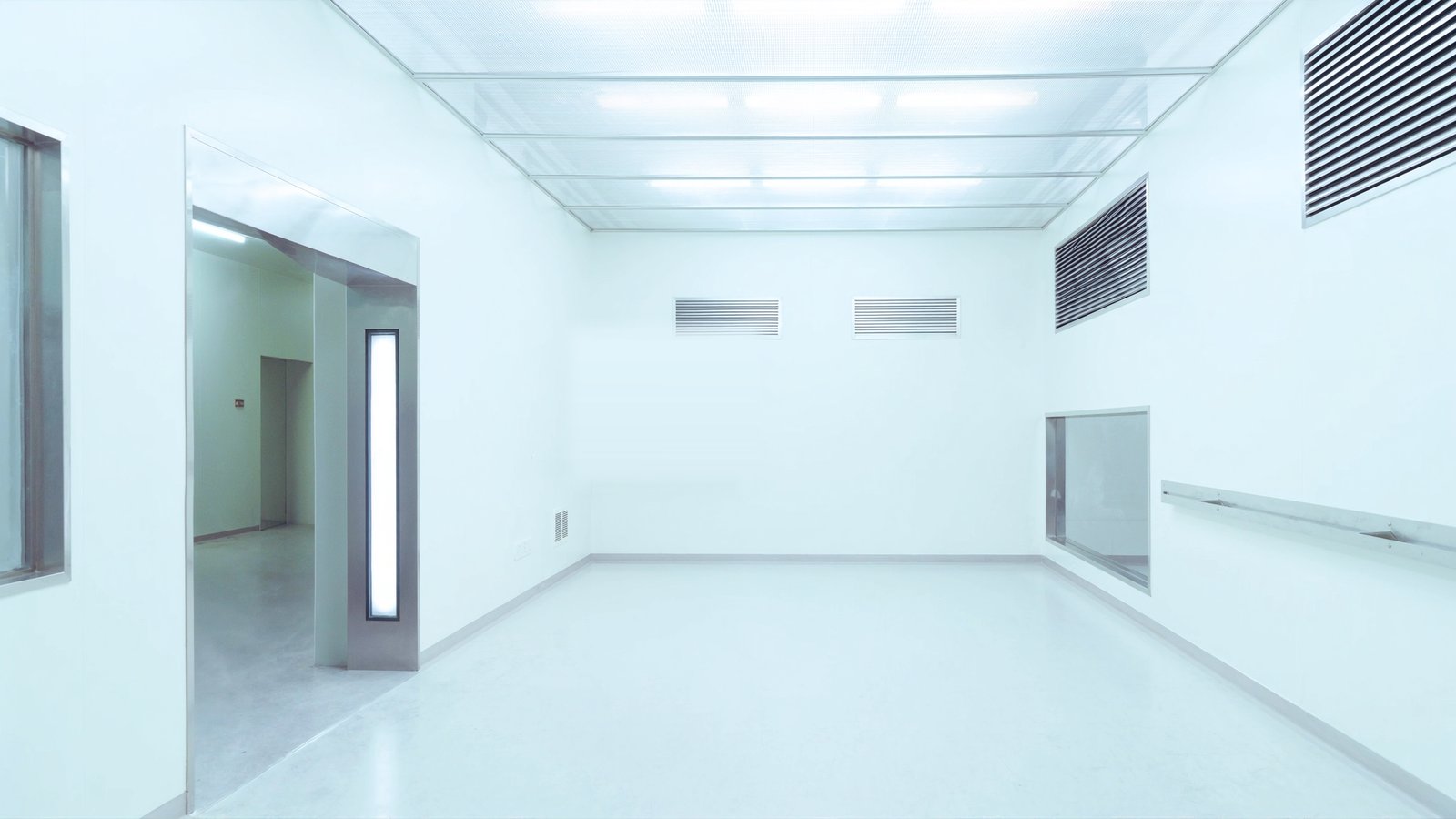
A cleanroom is only as good as the air that flows through it. The spectacular elements of a sterile facility, isolators, filling lines and personnel, are what stand out; yet the success or failure of contamination control is often decided by the unremarkable building services. The HVAC system, that is heating, ventilation and air conditioning, is the backbone of every cleanroom classification.
Grades and classes: two languages, one goal
EU-GMP Annex 1 works with cleanroom grades A to D. The associated particle classification relies on the ISO 14644 series of standards, which sets limits for airborne particles per cubic metre. The distinction between operating states is key: classification and monitoring take place both at rest and in operation. A facility that holds its class only when empty is not under control.
What the grades stand for
The four grades are not a ranking but areas of use. Grade A is the critical zone in which product and open containers are exposed to the surrounding environment, for example during aseptic filling, typically with unidirectional airflow. Grade B forms the immediate background to Grade A in aseptic manufacturing. Grade C and D are clean areas for less critical manufacturing steps. Every transition between grades requires airlocks and a clean pressure gradient.
What the HVAC must deliver
For a room to reach and hold its class, the air handling must fulfil several tasks at once:
- Retain particles and microorganisms via terminal HEPA filters and flush them out of the room.
- Build a pressure cascade between the cleanliness grades so that air always flows from clean to less clean.
- Keep temperature and humidity within the limits required for product and personnel.
Annex 1 does not require a fixed numerical value for the air change rate, but rather proof of effectiveness. A central criterion is the recovery time: after a disturbance, the room must return to its classified state within a defined and justified period.
Qualification: the evidence in numbers
The qualification of a cleanroom and HVAC system follows the familiar model of DQ, IQ, OQ and PQ and relies on the test methods of ISO 14644-3 and the expectations of Annex 1. This includes particle classification, the integrity testing of the HEPA filters, the measurement of air volumes and pressure differentials, airflow visualisations (smoke studies) in the critical area, and the determination of the recovery time.
A cleanroom class is not a snapshot but a state that the air handling must sustain permanently.
Monitoring instead of a one-off proof
After qualification, environmental monitoring takes over. Continuous particle counting in the Grade A area, regular microbiological sampling and the monitoring of pressure differentials show whether the facility remains in control. The results feed into the Contamination Control Strategy, which the revised Annex 1 places at its centre and which combines all contamination-relevant measures into an overall picture.
What counts in the end
Cleanroom technology forgives no design errors; they are paid back dearly during operation. Those who think HVAC, classification and monitoring together from the outset build a facility that also holds up in an audit. Vispact brings this interplay together in operational plant engineering, from the requirement through to ongoing monitoring.
Abdel R. Majadi, founder and Engineering Lead of Vispact GmbH: more than ten years of experience in running GMP cleanroom operations, focused on qualification to Annex 15, CSV to GAMP 5 and data integrity to ALCOA+.
More about the teamFrom article to project
If a topic from this article is currently on your plant's agenda, we will discuss it concretely in an initial consultation.
30 minutes, no obligation. Reply within one working day, directly from engineering.